Your website is your brand's digital storefront, and first impressions happen fast. Studies show that 93% of purchase decisions are influenced by visual design alone. For small business owners in Texas, this means your website isn't just a place to list services. It's the foundation of your brand identity and the primary tool for building customer trust. Professional website design directly impacts how customers perceive your business, whether they'll engage with your offerings, and ultimately, whether they'll choose you over competitors. This guide breaks down how strategic website design strengthens your brand and drives measurable business results.
Table of Contents
- Why website design matters for branding and customer trust
- Core website design elements that build your brand identity
- Enhancing user experience and technical performance to reinforce brand credibility
- Applying website design principles for local Texas small business branding success
- Partner with Digital Biz Agent for your website design needs
- Frequently asked questions
Key takeaways
| Point | Details |
|---|---|
| Visual design drives decisions | Website appearance influences 93% of purchase decisions, making design critical for conversions. |
| Professional sites build trust | Businesses with quality websites see 38% higher customer trust and 25% more leads. |
| Consistent branding boosts revenue | Maintaining uniform brand elements across platforms can increase revenue by 23%. |
| Mobile responsiveness is essential | Over 60% of web traffic comes from mobile devices, requiring responsive design. |
| UX improvements raise conversions | Excellent user experience design increases conversion rates by 40%. |
Why website design matters for branding and customer trust
Your website serves as the first interaction most customers have with your brand. Within seconds, visitors form judgments about your professionalism, reliability, and whether you're worth their time. Visual appeal drives most purchase decisions, with 93% of consumers citing design as a primary factor. This statistic isn't just about pretty colors. It reflects how deeply customers associate visual quality with business credibility.
Businesses investing in professional websites experience significant improvements. Research from the Small Business Administration shows a 38% increase in customer trust and a 25% boost in lead generation when companies prioritize quality web design. These aren't marginal gains. They represent substantial competitive advantages in markets where customers have endless options.
Neglecting website design sends a clear message to potential customers: you don't care enough about your business to invest in its public face. Outdated layouts, slow loading times, and confusing navigation all signal unprofessionalism. Customers extrapolate from these design failures, assuming your products or services will be equally subpar. For small business websites, this perception gap can mean the difference between growth and stagnation.
Think of your website as your digital storefront. You wouldn't open a physical store with peeling paint, broken signs, and cluttered aisles. The same logic applies online. Every design choice communicates something about your brand values, attention to detail, and commitment to customer experience. Investing in professional design isn't vanity spending. It's a strategic business decision that directly impacts your bottom line.
Pro Tip: Audit your current website by asking five people outside your industry to visit it and describe your brand in three words. Their responses will reveal whether your design communicates your intended brand identity.
Core website design elements that build your brand identity
Strong brand identity emerges from consistent, intentional design choices across every touchpoint. Your logo serves as the visual anchor, but effective branding extends far beyond a single graphic. Color schemes create emotional associations and improve brand recognition by up to 80%. Typography choices convey personality, whether you're projecting modern innovation or traditional reliability. These elements work together to create a cohesive brand experience that customers remember.
Consistent branding increases revenue by up to 23%, according to Lucidpress research. This consistency means using the same logo placement, color palette, and font families across your website, social media profiles, and printed materials. When customers encounter your brand across multiple channels, visual consistency builds recognition and trust. Inconsistent branding, by contrast, creates confusion and dilutes your message.
Responsive design has shifted from optional feature to absolute requirement. Mobile devices account for over 60% of global web traffic, and this percentage climbs higher for local searches. Texas small businesses targeting nearby customers must prioritize mobile responsiveness. A website that looks professional on desktop but breaks on smartphones alienates more than half your potential audience. Responsive design ensures your brand presents consistently regardless of device.

User experience encompasses navigation structure, call to action placement, and how easily visitors accomplish their goals. Websites with excellent UX see conversion rate increases of 40%. This improvement stems from removing friction in the customer journey. Clear menus, intuitive layouts, and prominent contact information all contribute to positive experiences that reflect well on your brand.
Here's how different design elements impact business outcomes:
| Design Element | Revenue Impact | Engagement Benefit | Implementation Priority |
|---|---|---|---|
| Consistent branding | Up to 23% increase | Higher recognition | High |
| Mobile responsiveness | Prevents 60% traffic loss | Broader reach | Critical |
| Excellent UX design | 40% conversion boost | Reduced bounce rates | High |
| Professional typography | Improved readability | Longer session duration | Medium |
| Strategic color use | 80% recognition gain | Emotional connection | High |
For Texas small business website design, understanding these elements helps prioritize investments. Start with mobile responsiveness and consistent branding, then refine UX and visual details. Each improvement compounds, creating a stronger overall brand presence.
Pro Tip: Choose three primary brand colors and stick to them religiously across all platforms. This discipline creates stronger visual associations than using a rainbow of colors that dilute your identity.
Familiarizing yourself with website design terminology helps you communicate effectively with designers and make informed decisions about your brand's digital presence.
Enhancing user experience and technical performance to reinforce brand credibility
Technical performance directly influences how customers perceive your brand. Page load delays of one second decrease conversions by 7%, according to Aberdeen Group research. When visitors encounter slow loading times, they don't blame their internet connection. They blame your business. Speed problems signal technical incompetence and lack of investment in customer experience.
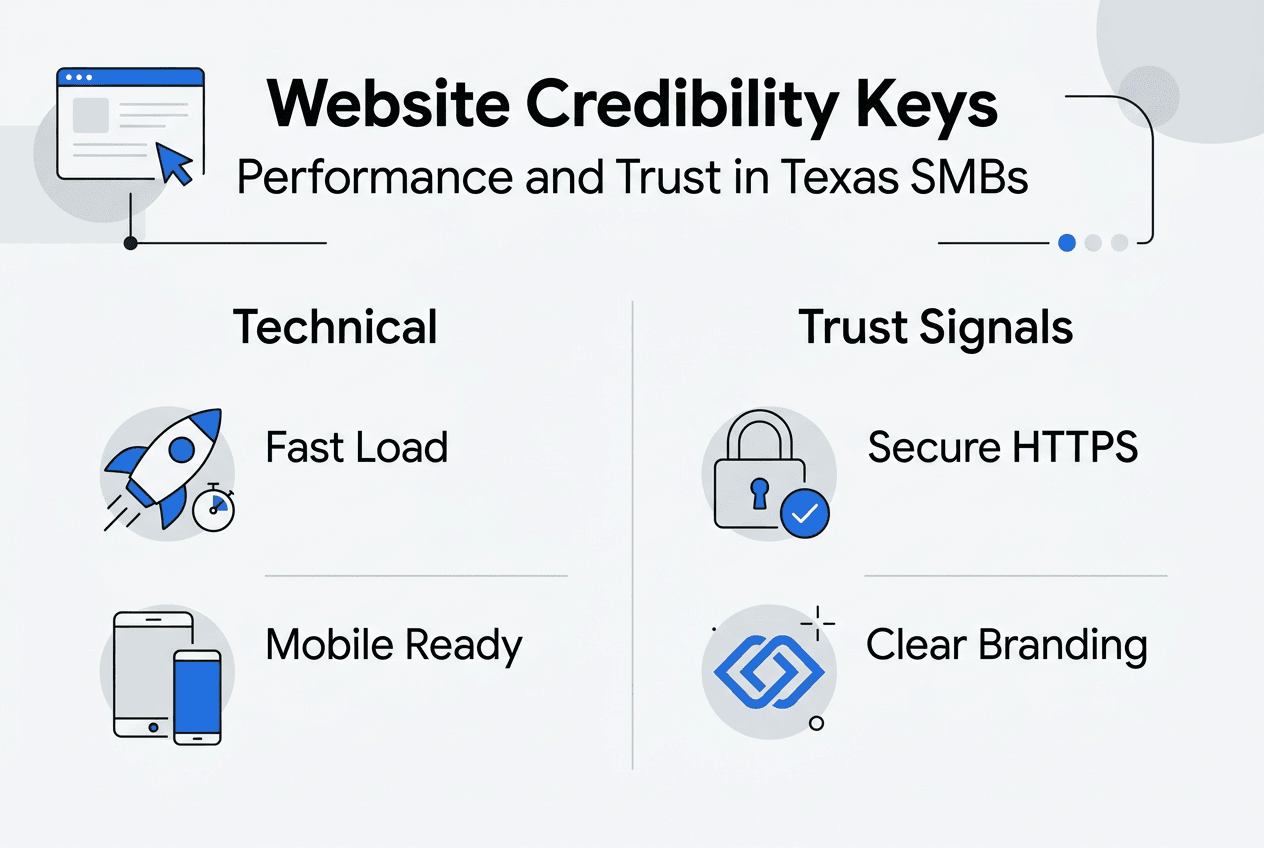
Mobile users demonstrate even less patience. Research shows that 53% of mobile visitors abandon sites taking longer than three seconds to load. For Texas small businesses competing in local markets, this statistic matters enormously. Potential customers searching on smartphones while driving or walking won't wait around. They'll click back to search results and choose a competitor with faster load times.
Website security builds trust through visible signals like SSL certificates and HTTPS protocols. Customers have learned to look for the padlock icon in their browser's address bar. Sites lacking this basic security feature immediately raise red flags. Beyond visual cues, actual security protects customer data and prevents breaches that devastate brand reputation. Investing in proper security measures demonstrates respect for customer privacy.
Small businesses prioritizing UX see tangible results, with Forrester Research documenting 15% increases in customer satisfaction and 10% boosts in sales. These improvements stem from reducing friction throughout the customer journey. Simple navigation, clear calls to action, and intuitive information architecture all contribute to positive experiences that customers associate with your brand.
Here are practical steps to optimize performance without breaking your budget:
- Compress images before uploading them to reduce file sizes while maintaining visual quality
- Enable browser caching so returning visitors load pages faster
- Minimize HTTP requests by combining CSS and JavaScript files
- Choose quality hosting providers that prioritize speed and uptime
- Implement SSL certificates for secure, encrypted connections
- Test your site on actual mobile devices, not just desktop browsers
- Remove unnecessary plugins or scripts that slow page rendering
Pro Tip: Use free tools like Google PageSpeed Insights to identify specific performance issues on your site. The tool provides actionable recommendations ranked by impact, helping you prioritize fixes.
For comprehensive guidance, explore website optimization steps tailored to Texas small and medium businesses. Technical improvements compound over time, creating faster, more reliable experiences that strengthen brand credibility.
Applying website design principles for local Texas small business branding success
Texas small businesses gain competitive advantages by integrating local SEO strategies with strong website design. Local SEO proves crucial for attracting nearby customers actively searching for services in their area. This means incorporating location specific keywords naturally throughout your site, claiming and optimizing Google Business Profile listings, and ensuring your name, address, and phone number display consistently across all platforms.
Brand consistency across channels amplifies your marketing effectiveness. Research confirms that consistent brand presentation can increase revenue by up to 23%. This consistency means your website, social media profiles, printed business cards, and storefront signage all reinforce the same visual identity. When customers encounter your brand across multiple touchpoints, repetition builds recognition and trust.
Implementing these strategies doesn't require massive budgets or technical expertise. Follow this practical approach:
- Audit your current brand presence across all platforms, noting inconsistencies in logos, colors, or messaging
- Create a simple brand style guide documenting your logo usage, color codes, and approved fonts
- Update your website to include city and region names in page titles, headings, and content naturally
- Claim your Google Business Profile and ensure all information matches your website exactly
- Add location pages for each area you serve, providing unique, valuable content for each region
- Request reviews from satisfied customers and respond professionally to all feedback
- Link your website to local business directories and chamber of commerce listings
- Share consistent branded content across social media platforms that links back to your website
For small businesses in Lubbock, Austin, Houston, Dallas, or any Texas city, local branding creates immediate competitive advantages. Customers searching for services near them prioritize businesses that demonstrate local presence and community connection. Your website design should reflect this local identity through strategic keyword placement, location specific content, and clear service area information.
Explore SEO friendly design principles specifically tailored for Texas small businesses to maximize local visibility. Understanding why updating your website in 2026 matters for local SEO helps prioritize improvements that drive measurable results.
Professional, consistent branding combined with local SEO optimization positions your business as the obvious choice for nearby customers. This integrated approach transforms your website from a digital brochure into an active tool for building brand recognition and generating qualified leads. Review available website design and SEO services to see how professional support accelerates these outcomes.
Partner with Digital Biz Agent for your website design needs
Applying these branding and design principles delivers results, but implementation requires expertise and time many small business owners lack. Digital Biz Agent specializes in creating affordable, professional websites for Texas small businesses that need credible online presence without enterprise budgets. Based in Lubbock and serving businesses statewide, we understand the unique challenges Texas entrepreneurs face when competing in local markets.
Our approach combines strategic website design with local SEO optimization, ensuring your site not only looks professional but actually generates leads. We handle everything from initial design through ongoing hosting, maintenance, and security. Plans start at just $25 monthly for landing pages and $50 monthly for full websites, making professional web presence accessible to businesses at any stage. Explore our complete website design and SEO services to see how we help Texas businesses build stronger brands online. Review essential website features every small business requires, and learn about common marketing mistakes to avoid as you grow your digital presence.
Frequently asked questions
How does professional website design build customer trust?
Professional design signals business credibility through visual polish, functional performance, and attention to detail. Customers unconsciously associate design quality with service quality, making them more likely to trust businesses with modern, well maintained websites. Security features like SSL certificates and fast loading times further reinforce trust by demonstrating technical competence and respect for user experience.
Why is mobile responsive design critical for small businesses?
Mobile devices generate over 60% of web traffic, with even higher percentages for local searches. Customers searching on smartphones expect sites to function perfectly on smaller screens. Non responsive websites frustrate mobile users, causing them to abandon your site immediately and choose competitors instead. Responsive design ensures you capture this majority traffic segment rather than losing it to poor mobile experiences.
What role does consistent branding play in revenue growth?
Consistent branding across all customer touchpoints increases revenue by up to 23% by building recognition and trust. When customers encounter identical visual elements across your website, social media, and physical materials, repetition strengthens brand recall. This consistency makes your business more memorable and positions you as professional and established, increasing likelihood of customer choice and repeat business.
How does local SEO enhance brand visibility for Texas businesses?
Local SEO helps your business appear in search results when nearby customers look for services you provide. Incorporating location specific keywords, maintaining accurate business listings, and creating location focused content all signal to search engines that you serve particular areas. Higher local search rankings mean more qualified traffic from customers ready to buy, directly supporting brand awareness and lead generation in your target market.
What simple steps improve website branding for small business owners?
Start by ensuring visual consistency across all platforms using the same logo, colors, and fonts everywhere. Optimize your site for mobile devices since most traffic comes from smartphones. Improve page speed by compressing images and choosing quality hosting. Add location specific content to boost local SEO. Finally, make navigation intuitive with clear calls to action that guide visitors toward contacting you or making purchases.