
Choosing the right website design can feel overwhelming when you're running a small business in Texas. You need something affordable, modern, mobile-friendly, and optimized for search engines, but the options seem endless. Template-based, custom, mobile-first, responsive, single-page, multi-page, the list goes on. Each type promises different benefits, costs, and results. This guide breaks down the most popular website design types for Texas small businesses and shows you how to pick the one that fits your goals, budget, and local market needs.
Table of Contents
- Key Takeaways
- How to evaluate website design options for Texas small businesses
- Top types of website designs for small business owners in Texas
- Comparing website designs: features, costs, and SEO impact
- Choosing the right website design for your Texas small business
- Explore professional website design and SEO services tailored for Texas small businesses
- Frequently asked questions
Key Takeaways
| Point | Details |
|---|---|
| Key decision criteria | Affordability, mobile responsiveness, SEO friendliness, modern aesthetics, and local support should guide which design you choose. |
| Mobile and SEO priority | Prioritize mobile first and SEO friendly designs to boost local visibility and user experience. |
| Local market support | Local support availability helps you resolve issues quickly and aligns the site with Texas market needs. |
| Templates offer quick value | Template based designs are affordable and fast to deploy but offer limited customization and branding. |
| Custom design costs vary | Custom designs provide full branding control but can cost thousands and take longer to develop. |
How to evaluate website design options for Texas small businesses
Before diving into specific design types, you need a clear framework to assess which option serves your business best. Start by identifying five critical criteria: affordability, mobile responsiveness, SEO friendliness, modern aesthetics, and local support availability. Affordability matters because small businesses operate on tight margins and need predictable costs. Mobile responsiveness and SEO are top priorities to improve visibility and user experience for small business websites. Modern aesthetics build trust and credibility with customers who judge your business within seconds of landing on your site. Local support ensures you get help when issues arise and someone understands the Texas market.
When reviewing design options, ask yourself practical questions. Can I update content myself or do I need a developer? Will this design load quickly on mobile devices? Does it include basic SEO features like meta tags and clean URLs? What happens if I need changes in six months? How much will ongoing maintenance cost? These questions reveal hidden costs and limitations that aren't obvious in initial proposals.
Consider how each criterion impacts your business sustainability. A cheap website that isn't mobile-friendly will cost you customers and search rankings. An expensive custom design might drain resources you need for marketing. A beautiful site without SEO-friendly design won't attract local traffic. Balance is key.
Pro Tip: Prioritize mobile-first and SEO-friendly designs to boost local search presence and attract Texas customers. Most of your potential customers will find you on their phones while searching for services near them.
Review the Texas small business website guide for additional criteria specific to local market conditions and customer expectations in your region.
Top types of website designs for small business owners in Texas
Understanding the main design categories helps you speak confidently with developers and make informed decisions. Here are five common types that Texas small businesses use, each with distinct advantages and trade-offs.
Template-based designs use pre-built layouts from platforms like WordPress, Wix, or Squarespace. They're the most affordable option, often costing $25 to $100 monthly. Setup takes days instead of weeks. You get modern, tested designs that work across devices. The downside is limited customization and less unique branding. Your site might look similar to competitors using the same template. However, for startups and businesses needing a quick online presence, templates deliver excellent value.
Custom designs are built from scratch to match your exact brand vision and functional requirements. Developers code every element specifically for your business. This approach creates unique, memorable websites that stand out in crowded markets. You get complete control over features, layout, and user experience. Small businesses benefit from designs that balance modern features with cost-effectiveness to maintain competitive advantage. The cost ranges from $3,000 to $15,000 or more, with longer development timelines. Custom designs make sense for established businesses with specific needs that templates can't meet.
Mobile-first designs prioritize smartphone users from the start. Designers create the mobile experience first, then adapt it for larger screens. This approach ensures your site works flawlessly on phones, where most local searches happen. Mobile-first design improves load times, simplifies navigation, and boosts conversion rates. It's essential for businesses targeting local customers who search on the go.
Responsive designs automatically adjust to any screen size, from phones to tablets to desktops. One website adapts to all devices using flexible grids and images. Responsive design has become the industry standard because it improves user experience and SEO rankings. Google uses mobile-friendliness as a ranking factor, making responsive design non-negotiable for businesses serious about online visibility.
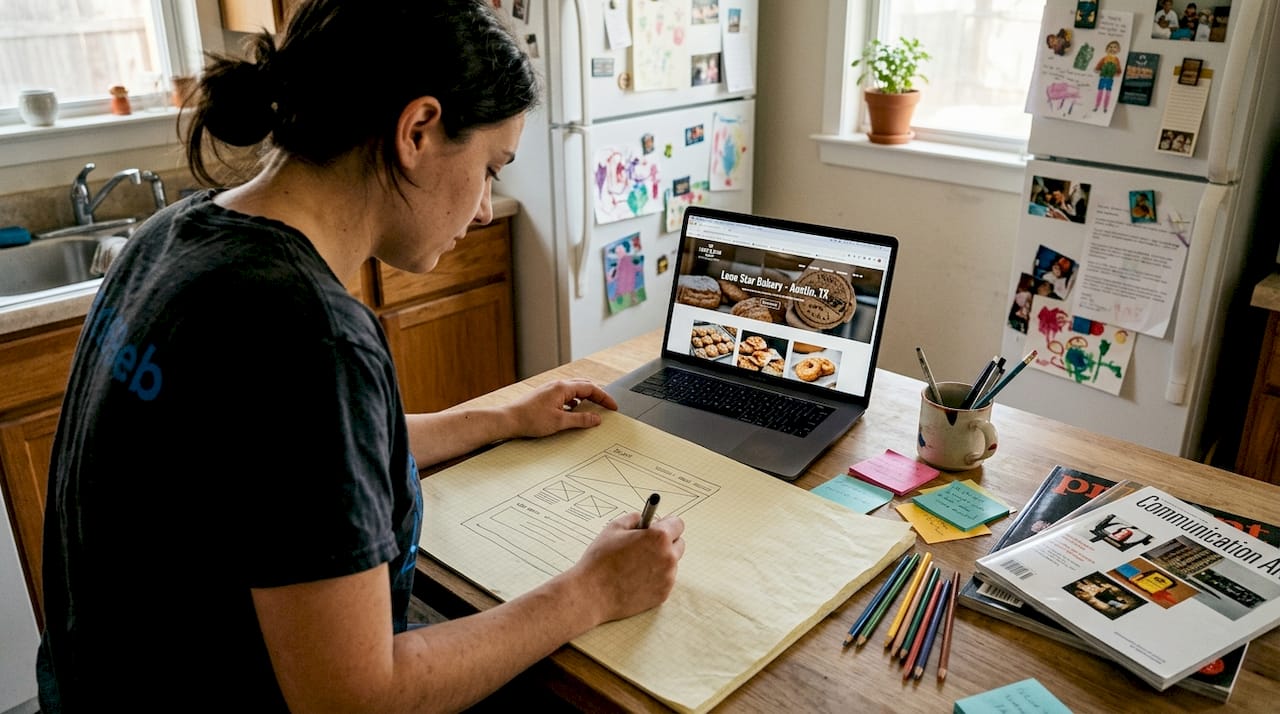
Single-page vs. multi-page designs represent different structural approaches. Single-page sites display all content on one scrolling page, ideal for simple businesses with focused offerings like restaurants or freelancers. They're fast, easy to navigate, and work well for mobile users. Multi-page sites organize content across separate pages, better for businesses with diverse services, extensive product catalogs, or content marketing strategies. They support better SEO through targeted page optimization.
Explore professional web design principles to understand how these design types implement best practices for Texas small businesses.
Comparing website designs: features, costs, and SEO impact
Seeing design types side by side clarifies which option fits your situation. This comparison highlights the most important factors affecting your decision and long-term success.
| Design Type | Initial Cost | Monthly Cost | SEO Friendliness | Ease of Updates | Local Support |
|---|---|---|---|---|---|
| Template-based | $0-$500 | $25-$100 | Good | Easy | Limited |
| Custom | $3,000-$15,000 | $50-$200 | Excellent | Moderate | Available |
| Mobile-first | $1,500-$8,000 | $50-$150 | Excellent | Moderate | Available |
| Responsive | $1,000-$10,000 | $50-$150 | Very Good | Easy to Moderate | Available |
| Single-page | $500-$3,000 | $25-$75 | Limited | Easy | Available |
Cost and SEO effectiveness vary widely among design types, influencing long-term business outcomes. Consider these key trade-offs:
- Template-based designs offer the fastest, cheapest launch but limit unique branding and advanced features
- Custom designs provide maximum flexibility and branding control at significantly higher costs and longer timelines
- Mobile-first and responsive designs deliver the best user experience and SEO benefits for local businesses
- Single-page sites work well for simple offerings but struggle with SEO for businesses needing multiple service pages
- Multi-page sites support comprehensive content strategies and better search rankings but require more maintenance
Pro Tip: Consider total cost of ownership including updates and SEO maintenance, not just initial price. A cheap template that requires expensive developer help for simple changes costs more over time than a slightly pricier option you can manage yourself.
Check modern website features to understand which capabilities each design type typically includes and what you might need to add separately.
Choosing the right website design for your Texas small business
Now that you understand the options, here's how to make the right choice for your specific situation. Follow these steps to match design type with business needs:
-
Define your primary website goal. Are you generating leads, selling products, building brand awareness, or providing information? Your goal determines which design features matter most. Lead generation needs clear calls to action and contact forms. E-commerce requires shopping cart functionality and payment processing. Brand building demands unique visual identity.
-
Assess your budget realistically. Include initial development, monthly hosting and maintenance, future updates, and SEO optimization. Don't forget the cost of your time if you'll manage content yourself. Template designs suit tight budgets under $2,000. Growing businesses with $3,000 to $8,000 should consider responsive or mobile-first designs. Established companies can invest in custom solutions.
-
Evaluate your technical comfort level. If you want to update content regularly without hiring help, choose template-based or responsive designs with user-friendly content management systems. If you prefer hands-off management, budget for ongoing developer support with any design type.
-
Consider your timeline. Need to launch in one to two weeks? Template designs are your only realistic option. Have two to four weeks? Responsive designs from experienced developers work well. Planning three months ahead? Custom designs become feasible.
-
Prioritize mobile and local SEO. Texas customers search for local businesses on phones. Any design you choose must be mobile-responsive and SEO-optimized. Successful small businesses align website design choices with measurable outcomes like traffic, leads, and customer engagement.
-
Plan for growth. Choose a design that scales with your business. Can you add pages, features, or e-commerce later? Will you outgrow the platform in two years? Starting with a flexible foundation saves money on future redesigns.
-
Verify local support availability. Working with Texas-based developers who understand your market provides advantages in response time, local SEO knowledge, and ongoing support. They know what works for businesses in your area.
Review your website performance and goals annually. Market conditions, customer expectations, and technology evolve. What works today might need updates next year. Regular assessment helps you stay competitive.
Explore why small business websites matter and review website essentials to ensure your chosen design includes all critical components for success.
Explore professional website design and SEO services tailored for Texas small businesses
You've learned how to evaluate and choose website designs that fit your business needs. Now it's time to work with experts who understand the Texas market and small business challenges. Digital Biz Agent specializes in creating affordable, mobile-responsive, SEO-optimized websites for local businesses throughout Texas.
Our transparent pricing plans start at just $25 monthly for landing pages and $50 monthly for full websites, making professional web design accessible to every small business budget. We handle everything from initial design to ongoing hosting, maintenance, and security. You get a modern, professional website in as little as one week, with bilingual support in English and Spanish. Our team provides the local expertise and ongoing support you need to keep your website fresh, competitive, and generating results. Whether you're launching your first site or ready for a redesign, we'll guide you through choosing the right design type and features for your specific goals. Learn more about our website design and SEO services and discover how often to redesign to maintain competitive advantage.
Frequently asked questions
What are the most affordable website design types for startups?
Template-based designs offer the lowest entry cost for Texas startups, typically ranging from $0 to $500 for setup and $25 to $100 monthly for hosting and maintenance. These platforms provide modern, mobile-responsive layouts that you can customize with your branding and content. While they limit unique design elements, they deliver professional results quickly and affordably. Many successful small businesses start with templates and upgrade to custom designs as they grow. Check our pricing plans to see affordable options that include professional setup and ongoing support.
How important is mobile responsiveness for small business websites?
Mobile responsiveness is absolutely critical for small business success in 2026. Mobile traffic now constitutes over half of small business website visits, impacting search rankings significantly. Google prioritizes mobile-friendly sites in search results, especially for local queries. When potential customers search for services near them, they're almost always on smartphones. A site that doesn't work well on mobile loses those customers to competitors. Beyond search rankings, mobile responsiveness directly affects user experience, conversion rates, and your business credibility. Review SEO-friendly design tips to understand how mobile optimization improves your local visibility.
What website design features improve SEO for local Texas businesses?
Several design features directly boost your search rankings and local visibility. SEO-optimized website features include clean code, fast loading times, and local business schema markup. Fast site speed keeps visitors engaged and satisfies Google's performance requirements. Mobile optimization ensures your site works flawlessly on phones where most local searches happen. Local schema markup helps search engines display accurate business information like your address, hours, and phone number in search results. Clean site structure with logical navigation and internal linking helps search engines crawl and understand your content. SSL security certificates build trust with both visitors and search engines. Explore SEO-friendly design principles to implement these features effectively.
Should I choose a single-page or multi-page website design?
Your choice depends on your business complexity and content strategy. Single-page designs work best for simple businesses with focused offerings like restaurants, freelancers, or single-service providers. They're fast, easy to navigate on mobile, and keep visitors engaged with one continuous scroll. However, they limit SEO opportunities because you can't optimize multiple pages for different keywords. Multi-page designs suit businesses with diverse services, multiple locations, or content marketing strategies. They support better SEO through targeted page optimization and allow organized presentation of complex information. Most growing small businesses benefit from multi-page designs that can expand as their offerings grow.
How often should Texas small businesses redesign their websites?
Most small businesses should consider a significant website refresh every two to three years to stay current with design trends, technology, and customer expectations. However, you should review your site's performance annually and make incremental updates as needed. If your site isn't mobile-responsive, update immediately. If load times are slow or navigation is confusing, address those issues promptly. Major business changes like new services, rebranding, or market expansion warrant redesigns. Technology shifts and security requirements also drive update needs. Regular content updates and minor design tweaks keep your site fresh between major redesigns. The key is balancing investment with results, ensuring your website continues generating leads and supporting business growth.