TL;DR:
- Good web design builds trust, reduces bounce rates, and increases conversions for small businesses.
- Essential elements include mobile-friendliness, clear calls to action, fast loading, trust signals, and SEO basics.
- Continuous small investments in design amplify growth, especially when aligned with marketing and operations.
Many Texas small businesses work hard every day and still struggle to grow. The problem is rarely effort. It often comes down to one overlooked factor: web design. Not just how a site looks, but how it performs, communicates trust, and turns visitors into customers. Texas SMBs face real revenue gaps that smart, affordable design can help close. This guide walks you through exactly how design affects your bottom line, what elements matter most, and how to make smart investments no matter your budget or location in Texas.
Table of Contents
- Understanding the business impact of good design
- Key elements of effective, affordable small business design
- How design decisions accelerate growth in different Texas markets
- Getting the most out of design: Integrating with marketing and operations
- The overlooked ROI of design: What most businesses get wrong
- Ready to leverage web design for your Texas business?
- Frequently asked questions
Key Takeaways
| Point | Details |
|---|---|
| Design drives growth | Investing in web design directly leads to increased sales and greater brand trust for Texas small businesses. |
| Affordable wins count | Effective, affordable design solutions can level the playing field for rural and urban firms alike. |
| Integration amplifies impact | Aligning design with marketing and operations multiplies business outcomes and online success. |
| Continuous investment matters | Seeing web design as an ongoing strategy, not a one-off project, unlocks compounding growth for small businesses. |
Understanding the business impact of good design
Web design is not just about colors and fonts. For a small business, it is your first impression, your sales pitch, and your customer service desk all in one place. When someone lands on your website, they decide within seconds whether to stay or leave. That decision is almost entirely based on design.
Understanding the website importance for SMBs starts with recognizing that your site is a business tool, not a digital brochure. It should guide visitors toward a specific action: calling you, booking a service, or buying a product.
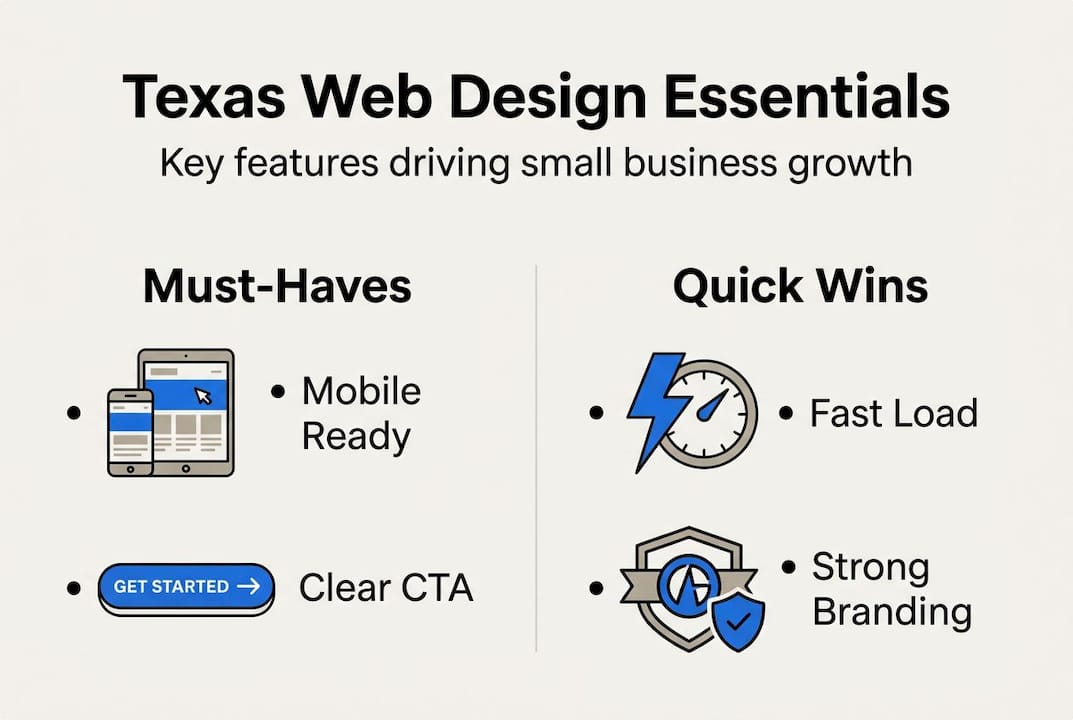
Research confirms this matters. Product design capability boosts sales growth, and that effect gets stronger when paired with solid marketing and operations. In other words, design alone helps. Design plus a clear strategy multiplies results.
Here is how good design directly influences your business outcomes:
- Builds trust immediately. A clean, professional site signals that your business is legitimate.
- Reduces bounce rates. Clear navigation keeps visitors on your site longer.
- Increases conversions. Strong calls to action guide visitors toward buying.
- Supports SEO. Well-structured design helps Google find and rank your pages.
- Improves customer retention. A positive experience brings people back.
| Business factor | With strong design | Without strong design |
|---|---|---|
| Customer trust | High | Low to moderate |
| Conversion rate | Up to 200% higher | Baseline or declining |
| Search visibility | Improved | Limited |
| Revenue growth | Accelerated | Stagnant |
| Brand consistency | Strong | Fragmented |
"Design capability is not a luxury. It is a direct driver of firm sales growth, especially when marketing and operations support it." Based on findings from Springer research on design impact.
Texas small business revenue data shows that businesses with a credible online presence hit revenue milestones faster than those without one. Design is the foundation of that presence.
Key elements of effective, affordable small business design
You do not need a $20,000 custom website to compete. You need the right elements done well. Here are the five things every small business website must have:
- Mobile-friendly layout. More than 60% of web traffic comes from phones. If your site does not work on mobile, you are losing customers.
- Clear calls to action. Every page should tell visitors exactly what to do next. "Call now," "Get a free quote," "Book today."
- Fast load times. A one-second delay can reduce conversions by up to 7%. Speed is not optional.
- Trust signals. Reviews, certifications, photos of your team, and a physical address all build credibility.
- SEO basics. Page titles, meta descriptions, and keyword-rich content help customers find you through Google.
You can explore a full breakdown of essential website features to make sure nothing gets missed.
Prioritize by ROI. Mobile responsiveness and calls to action cost little to implement but deliver the most immediate return. Add trust signals and SEO content as you grow.
Pro Tip: Allocating just 2 to 5% of your annual revenue to design delivers better long-term returns than sporadic, expensive redesigns. Consistent small investments compound over time.
Research shows that under-investing in design creates compounding losses in conversions and brand equity. Every month with a weak site is a month of missed leads and lost trust.
For Texas businesses on a tight budget, affordable options include:
- Using modern, mobile-ready templates as a starting point
- Working with local agencies that offer scalable pricing
- Phasing your redesign, starting with your homepage and contact page
- Reviewing website pricing options to find a plan that fits your stage of growth
How design decisions accelerate growth in different Texas markets
Texas is not one market. A barbecue shop in Amarillo faces different challenges than a boutique in Austin. Design strategy should reflect your specific context.

Urban Texas businesses deal with heavy competition. A strong visual identity, fast-loading pages, and clear differentiation help you stand out in crowded search results. Your design needs to answer "why you" before the visitor even reads a word.
Rural Texas businesses face a different problem. Rural SMBs can bridge revenue gaps with a strong online presence, especially when foot traffic is limited and customers may be searching from miles away.
See how Texas website design success looks in practice for businesses across the state.
| Factor | Urban Texas SMBs | Rural Texas SMBs |
|---|---|---|
| Primary challenge | High competition | Limited local foot traffic |
| Design priority | Differentiation and speed | Visibility and trust |
| Key opportunity | Local SEO, reviews | Google My Business, mobile-first |
| Common win from design | Higher conversion rates | More inbound calls and inquiries |
If you run a rural Texas business, focus on these priorities first:
- Set up and optimize your Google My Business profile
- Make sure your site loads fast on mobile networks, not just Wi-Fi
- Add local customer testimonials to build community trust
- List your service area clearly so Google knows where you operate
Pro Tip: Free and low-cost tools like Google Search Console, Canva for graphics, and free website audits from local agencies help rural businesses compete without large budgets. Start with what is free and build from there.
Getting the most out of design: Integrating with marketing and operations
A great website sitting alone does not grow your business. Design works best when it connects to everything else you do. Here is how to align your design with your marketing and daily operations:
- Keep branding consistent. Use the same colors, fonts, and tone across your website, social media, and printed materials. Inconsistency confuses customers.
- Make content easy to update. Choose a platform that lets you add blog posts, update hours, or change prices without calling a developer.
- Connect your contact forms to your workflow. Every lead from your website should go directly to your inbox or CRM so nothing gets missed.
- Align your design with your marketing calendar. Promotions, seasonal offers, and new services should reflect on your site right away.
- Avoid common mistakes. Review common marketing mistakes that can undercut even a well-designed site.
When design, marketing, and operations work together, the benefits compound:
- More qualified leads from organic search
- Higher revenue per customer through better upsell opportunities
- Easier customer management through integrated booking or contact tools
- Stronger brand recall that drives repeat business
"Design amplifies sales growth most when it is not isolated to one department. Cross-functional alignment, from marketing to operations, is what turns design investment into measurable revenue." Based on product design and business performance research.
One pitfall to avoid: over-focusing on technology or product features at the expense of design and marketing. Many small businesses spend on new tools or inventory while their website remains outdated. The result is a business that works hard but stays invisible online. Explore affordable online growth strategies to keep the balance right.
The overlooked ROI of design: What most businesses get wrong
Most guides treat web design as a one-time project. Build it, launch it, forget it. That thinking is costing Texas small businesses real money.
Design is not an expense. It is a compounding investment. Every improvement you make builds on the last one. A better call to action raises your conversion rate. A faster page keeps more visitors from leaving. A stronger trust signal increases the chance someone picks up the phone. Each change stacks.
The businesses that get this right do not wait for a full redesign every few years. They treat their website like a living part of the business and make small, consistent improvements. They track what works and adjust.
What most guides miss is that under-investing in design does not just hurt you today. It sets you back for every month that follows. Lost conversions today mean fewer reviews, less word-of-mouth, and lower search rankings next year.
Staying current with modern web trends for SMBs does not require a big budget. It requires a mindset shift: design is strategy, not decoration. Start small, stay consistent, and the results will follow.
Ready to leverage web design for your Texas business?
You now have a clear picture of what design does for growth, what elements matter most, and how to connect your site to your broader business goals. The next step is putting it into action.
At Digital Biz Agent, we help Texas small businesses get professional, mobile-ready websites starting at $50 per month, with no large upfront costs. You can view our affordable website design & SEO options or start with our website essentials checklist to see exactly where you stand. We offer free demos, fast turnaround, and bilingual support. Getting started is simple.
Frequently asked questions
How much should a small business in Texas invest in website design?
Experts recommend allocating about 2 to 5% of annual revenue for website design to maximize growth and avoid lost conversions over time.
What is the biggest mistake Texas small businesses make with design?
The biggest mistake is under-investing. Under-investment compounds losses in conversions, brand trust, and search visibility with every month that passes.
Does website design really affect rural Texas small businesses differently?
Yes. Rural Texas businesses benefit even more from strong design because a professional website helps them bridge rural revenue gaps and reach customers far beyond their immediate area.
Can affordable design really have a measurable impact on sales?
Absolutely. Research confirms that design boosts firm sales growth significantly, especially when the site is paired with consistent marketing and a clear customer journey.