
Choosing the right web design solution for your small business can feel overwhelming. With so many options claiming to deliver mobile responsiveness, SEO optimization, and affordability, how do you know which approach truly meets your needs? Small business owners in Lubbock face unique challenges when building an online presence that attracts local customers while staying within budget. This guide walks you through the modern web design trends that matter most, helping you make an informed decision that drives real business growth and customer engagement.
Table of Contents
- Key Takeaways
- Criteria for choosing modern web design solutions
- Top modern web design trends for small businesses
- Comparing popular website design approaches for Lubbock entrepreneurs
- Making the right modern web design decision for your business
- Explore tailored web design & SEO services for small businesses
- FAQ
Key Takeaways
| Point | Details |
|---|---|
| Mobile responsiveness | Your site must adapt to smartphones and tablets to reach local customers and reduce bounce. |
| SEO optimization | Your design should include fast loading, clean code, proper heading structure, and mobile friendly navigation to boost local search rankings. |
| Affordable pricing | Look for transparent costs and scalable plans that fit small budgets without sacrificing essential features. |
| Accessible UX | Ensure intuitive navigation, readable typography, clear calls to action, and accessibility features for all users. |
Criteria for choosing modern web design solutions
Selecting the right web design approach requires evaluating several critical factors that directly impact your online success. Mobile responsiveness and SEO optimization are critical criteria for local small businesses aiming to improve their online presence. Your website must adapt seamlessly to smartphones and tablets, since most local customers search for services on mobile devices. A responsive design ensures your content displays correctly regardless of screen size, preventing frustrated visitors from bouncing to competitors.
SEO optimization determines whether potential customers can find you through search engines. Without proper technical SEO, even the most beautiful website remains invisible to your target audience. Your design choice should include features like fast loading speeds, clean code structure, proper heading hierarchy, and mobile-friendly navigation. These elements signal to search engines that your site deserves higher rankings in local search results.
Affordability matters significantly for small business budgets. Look for solutions that offer scalable pricing without sacrificing quality or essential features. The best modern web design approaches provide transparent costs, flexible payment options, and room to grow as your business expands. Avoid platforms that lock you into expensive contracts or charge hidden fees for basic functionality.
User experience and accessibility serve as quality markers that separate professional websites from amateur attempts. Your visitors should navigate intuitively, find information quickly, and complete desired actions without confusion. Accessibility features ensure all potential customers can use your site, including those with disabilities. Simple navigation menus, readable fonts, sufficient color contrast, and clear calls to action create positive experiences that convert visitors into customers.
Pro Tip: Prioritize a mobile-first design strategy by testing your website on actual smartphones before launch. This approach ensures the majority of your local audience enjoys a smooth browsing experience from their first visit.
Top modern web design trends for small businesses
Minimalist design dominates current web aesthetics for good reason. Clean layouts with ample white space load faster, reduce visual clutter, and guide visitors toward important content naturally. Minimalism, dark mode, and AI chatbots are among the trending features enhancing usability and modern appeal. Small businesses benefit from minimalism because it requires fewer graphics and complex elements, lowering both development costs and ongoing maintenance needs. Focus on essential information, strategic color choices, and clear typography to create professional impressions without overwhelming visitors.
Dark mode has evolved from a novelty feature to a user expectation. This display option reduces eye strain during evening browsing sessions and gives websites a contemporary, sophisticated appearance. Many users now prefer dark interfaces, especially on mobile devices where screen brightness affects battery life. Implementing dark mode shows you care about user preferences while staying current with design standards. The contrast also makes content more readable in low-light environments, improving overall accessibility.
Micro-animations add subtle motion that enhances engagement without distracting from core content. These small visual effects include button hover states, loading indicators, smooth scrolling transitions, and animated icons. When used strategically, micro-animations guide user attention, provide feedback on interactions, and make your website feel more responsive and alive. Small businesses can implement simple animations without technical complexity, creating memorable experiences that distinguish your brand from static competitor sites.
Chatbots powered by artificial intelligence transform customer service capabilities for small businesses. These automated assistants handle common questions 24/7, qualify leads while you sleep, and provide instant responses that modern consumers expect. Implementing a basic chatbot requires minimal technical knowledge, with many affordable options designed specifically for small business needs. Your chatbot can collect contact information, schedule appointments, answer frequently asked questions, and escalate complex issues to human staff during business hours.
Additional trending features include:
- Video backgrounds that showcase your business personality
- Scroll-triggered animations that reveal content progressively
- Voice search optimization for hands-free browsing
- Personalized content based on visitor behavior
- Social proof elements like customer testimonials and review widgets
Comparing popular website design approaches for Lubbock entrepreneurs
Template-based websites offer the fastest path to establishing an online presence. These pre-designed layouts provide professional aesthetics at fraction of custom design costs, with many options specifically tailored for common business types. Templates work well for businesses needing quick launches or testing market viability before investing heavily. However, template limitations include less uniqueness, potential similarity to competitor sites, and restrictions on customization depth. Each web design approach has trade-offs in cost, customization, SEO capabilities, and mobile responsiveness.
Custom design delivers complete branding control and unique online identities that perfectly match your business vision. Working with experienced designers ensures every element aligns with your specific goals, target audience preferences, and competitive positioning. Custom sites accommodate complex functionality, integrate seamlessly with existing business systems, and scale effortlessly as requirements evolve. The main drawback involves higher upfront investment and longer development timelines. Small businesses with established branding, specific feature requirements, or plans for significant growth benefit most from custom approaches.
DIY website builders empower business owners to create and manage sites independently using drag-and-drop interfaces. These platforms democratize web design, eliminating technical barriers and providing immediate control over content updates. Popular builders include user-friendly editors, hosting services, and basic SEO tools bundled into monthly subscriptions. The flexibility appeals to hands-on entrepreneurs comfortable learning new software. Challenges arise when DIY sites lack advanced SEO optimization, mobile responsiveness rigor, or professional design polish that custom solutions provide.
| Approach | Average Cost | SEO Capability | Mobile Responsiveness | Ease of Use | Best For |
|---|---|---|---|---|---|
| Template | $25-75/month | Moderate | Good | Easy | Quick launches, tight budgets |
| Custom Design | $2,000-10,000+ | Excellent | Excellent | Requires expert | Established businesses, unique needs |
| DIY Builder | $10-40/month | Basic to Moderate | Variable | Very Easy | Hands-on owners, simple sites |
| Agency Service | $50-150/month | Excellent | Excellent | Very Easy | Busy owners, ongoing support |
Pro Tip: Start with a professionally designed template that matches your industry, then customize branding elements as your budget grows. This hybrid approach balances affordability with quality while allowing gradual improvements based on customer feedback and business performance.
Making the right modern web design decision for your business
Evaluating your specific situation guides you toward the most effective design solution. Aligning design choice to business goals and customer expectations ensures effective online presence and growth. Consider these decision steps:
-
Assess your realistic budget including both initial costs and ongoing monthly expenses. Factor in potential revenue increases from improved online visibility when calculating return on investment.
-
Define your primary website goals clearly, whether generating leads, selling products, providing information, or building brand awareness. Different objectives require different design priorities and functionality.
-
Research your target audience behavior, particularly their device preferences and browsing habits. Local Lubbock customers may have different patterns than national audiences.
-
Inventory required features and functionality, distinguishing must-haves from nice-to-haves. Essential elements might include contact forms, appointment scheduling, e-commerce capabilities, or service portfolios.
-
Evaluate your technical comfort level honestly. Some business owners enjoy managing website updates while others prefer delegating technical tasks to focus on core business activities.
-
Consider your timeline for launch and whether you need immediate online presence or can invest time in custom development. Market opportunities sometimes require quick action.
-
Plan for future growth and scalability needs. Your chosen solution should accommodate expanding services, increased traffic, and evolving business models without requiring complete rebuilds.
Prioritize mobile responsiveness above all other factors if your business serves local customers who search for services on smartphones. Most Lubbock residents use mobile devices to find nearby businesses, read reviews, and make contact decisions. A website that frustrates mobile users loses potential customers before they ever call or visit your location. Test your design on multiple devices and screen sizes to ensure consistent, positive experiences.
Consider SEO potential carefully when evaluating design options. The most beautiful website delivers no value if customers cannot find it through search engines. Look for solutions that include technical SEO fundamentals like fast loading speeds, proper meta tags, XML sitemaps, and mobile optimization. Local SEO features such as Google Business Profile integration and location-specific content help you dominate Lubbock search results for your industry.
Remember that web design requires periodic updates to maintain effectiveness. Technology evolves, customer expectations shift, and competitors improve their online presence constantly. Plan to revisit and refresh your website design every two to three years, updating content regularly between major redesigns. This ongoing commitment keeps your business looking current, functioning optimally, and ranking well in search results.
Explore tailored web design & SEO services for small businesses
Digital Biz Agent specializes in creating modern, affordable websites that help Lubbock small businesses thrive online. Our website design & SEO services combine professional aesthetics with powerful functionality, ensuring your site attracts customers and drives growth. We understand the unique challenges local entrepreneurs face, from tight budgets to limited technical knowledge, and we have built our services around making professional web presence accessible to everyone.
Our approach prioritizes mobile responsiveness, SEO optimization, and user-friendly designs that convert visitors into customers. Starting at just $25 per month for landing pages and $50 monthly for complete websites, we offer scalable solutions that grow with your business. Every site includes hosting, security, maintenance, and ongoing support, eliminating technical headaches so you can focus on serving customers.
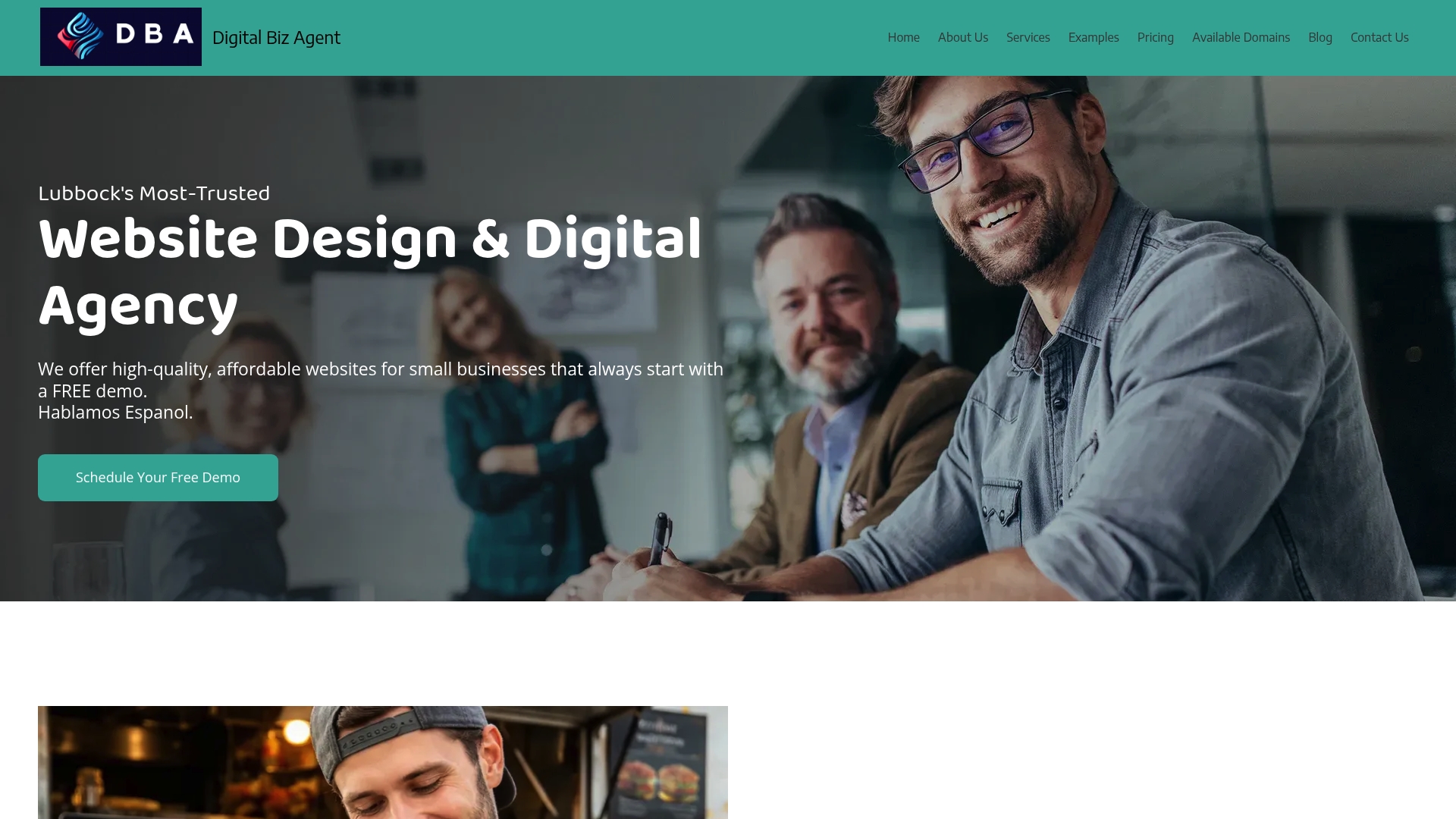
Discover 8 things every small business website needs to succeed online, or learn how often should you redesign your website to maintain competitive advantage. Our team delivers professional results in as little as one week, with free initial demos and bilingual support in English and Spanish. Let us handle the technical details while you enjoy the benefits of a modern, effective online presence.
FAQ
What are modern web design trends?
Modern web design trends encompass contemporary approaches that prioritize mobile responsiveness, fast loading speeds, clean aesthetics, and user-centered experiences. These trends include minimalist layouts, dark mode options, AI-powered chatbots, micro-animations, and voice search optimization. They matter for business websites because they meet current user expectations, improve search engine rankings, and create professional impressions that build trust with potential customers.
How can mobile responsiveness benefit my small business website?
Mobile responsiveness ensures your website displays correctly and functions smoothly on smartphones and tablets, which most local customers use to search for services. This adaptation improves usability by eliminating pinching, zooming, and horizontal scrolling that frustrate visitors. Responsive design also boosts SEO rankings since search engines prioritize mobile-friendly sites, increasing your visibility in local search results and enhancing customer satisfaction that leads to higher conversion rates.
What should I consider when choosing a website design for my small business?
Consider your budget constraints and seek cost-effective solutions that provide essential features without unnecessary expenses. Evaluate search engine optimization capabilities to ensure potential customers can find you online. Prioritize user-friendly content management systems that allow easy updates without technical expertise. Verify mobile compatibility across devices and ensure the design reflects your brand identity while meeting customer expectations for professionalism and functionality.
How much should a small business spend on web design?
Small business web design costs vary widely based on approach, from $10-40 monthly for DIY builders to $2,000-10,000+ for custom development. Template-based professional services typically range from $25-150 per month including hosting and maintenance. The right investment depends on your specific needs, growth goals, and technical comfort level. Focus on value rather than lowest price, considering how improved online presence will generate revenue and customer acquisition over time.
Can I update my website content myself after it is built?
Most modern web design solutions include content management systems that allow business owners to update text, images, and basic elements without coding knowledge. Template-based and agency-managed sites typically provide user-friendly editors with drag-and-drop functionality. The ease of self-management varies by platform, so discuss content update capabilities with your designer before committing. Many businesses prefer hybrid approaches where they handle routine content updates while professionals manage technical maintenance and design improvements.